
The Roles We Play: Who Are You Beneath Everyone Else's Expectations?
Have you ever stopped and wondered just how many different roles you play in a day?
You're the mother, the wife, the partner, the daughter, the friend, the employee, the business owner, the organiser, the problem solver, the peacekeeper, the one everyone turns to when something needs doing.
And somewhere amongst all of that, there's you.
But how often do you actually stop and consider what you need, what you want, or even how you feel?
For many women, life becomes a constant juggling act of responsibilities, commitments and expectations. We get so used to being everything to everyone that we don't necessarily realise how much of ourselves we're putting aside in the process.
We just keep going.
Because that's what we've always done.
And sometimes, it isn't until we're overwhelmed, running on empty or questioning our lives that we begin wondering how we ended up here in the first place.
How Do We Become These Versions of Ourselves?
The interesting thing about the roles we play is that many of them begin developing long before we're even aware of what's happening.
As children, we're constantly learning about ourselves and the world around us. We notice how people behave, what gets praised, what causes conflict and what seems to keep everyone happy.
And naturally, we adapt.
Perhaps being helpful brought you praise or affection, so you became the helpful one. Maybe staying quiet kept the peace, so you learnt not to speak up. Perhaps you grew up needing to rely on yourself, so you became fiercely independent.
Or maybe you discovered that being responsible, achieving things or looking after everybody else gave you a sense of belonging, purpose or value.
None of these things necessarily happened consciously. We were simply learning how to find our place in the world around us.
Over time, those behaviours can become so familiar that we begin to see them as part of who we are.
I'm just the strong one.
I've always been independent.
I'm the one who keeps everyone happy.
It's easier if I just do it myself.
But here's something worth considering.
Are these qualities always a reflection of who we genuinely are, or have some of them developed because of what we learnt was expected, needed or accepted?
Often, it's a mixture of both.
And that's where things can get interesting.
When Being Everything to Everyone Becomes Exhausting
I know what it's like to reach a point where you're emotionally, physically and mentally exhausted.
Looking back, I can see that it wasn't just everything I was doing that had worn me out. It was also the enormous amount of energy I was spending trying to be the person I thought everybody else wanted or needed me to be.
I was the strong one. The capable one. The one who could manage everything.
And I'd become really bloody good at it.
I'd become so good at wearing those masks that even my own family didn't realise just how much I was struggling underneath them.
I could put on a smile when I didn't feel like smiling. Keep going when things felt difficult. Carry responsibilities and make sure everybody else was okay, while quietly pushing my own needs further and further down the list.
Being vulnerable wasn't something I really allowed myself to do. Somewhere along the way, I'd developed this belief that strength meant handling everything myself.
And the thought of asking for help? Well, that didn't come naturally either.
There was the physical toll of everything I was doing, but there was also the mental and emotional effort of constantly trying to live up to the expectations I'd placed on myself.
I think this is something many women experience without necessarily recognising it.
From the outside, everything can look perfectly fine. You're showing up, getting things done and managing all the moving parts of life.
But underneath, you're running on empty.
And because you've become so good at being the one who copes, the people around you may have absolutely no idea what's really going on.
When Even Self-Care Becomes Another Chore
We hear so much about the importance of looking after ourselves.
Make time for yourself. Prioritise your wellbeing. Do something that brings you joy.
And yes, all of those things matter.
But there's something I hear from women time and time again.
The minute life gets busy, their self-care is the first thing to go.
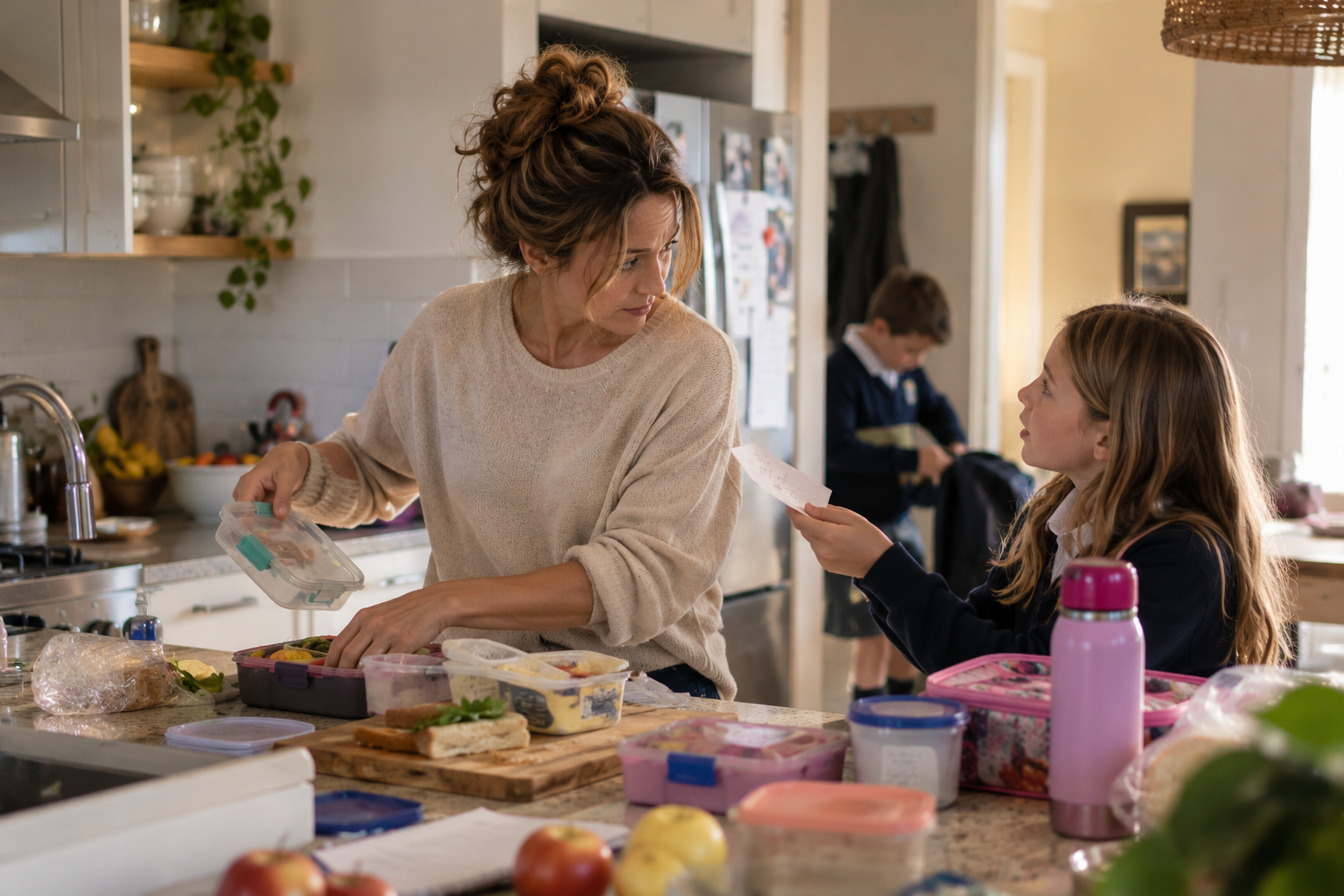
The school holidays arrive, the kids have concerts and sporting commitments, work gets hectic, someone in the family needs extra support, or suddenly everything seems to be happening at once.
And what's the first thing we drop?
The things we were doing for ourselves.
That walk, the Pilates class, the quiet time in the morning, or whatever it is that helps us feel a little more balanced.
Suddenly, there's no time. Everybody else needs something, and we're back at the bottom of the priority list.
And here's the interesting part. We already know that looking after ourselves can help us manage those stressful periods. Yet when things get overwhelming, it's often the first thing we let go of.
Why?
Sometimes it's because we've become so accustomed to putting everybody else's needs before our own that it feels almost automatic.
We want everything to run smoothly. The kids organised, the family taken care of, the commitments managed and everything ticking along as it should.
Because somewhere in our minds, we believe that if we can stay on top of everything, there'll be less chaos and less stress for us to deal with.
So we keep planning, organising, anticipating everybody else's needs and trying to make sure nothing falls through the cracks.
But here's the irony.
In trying to make life less stressful for ourselves, we can end up creating even more pressure by taking responsibility for keeping everything running smoothly.
And while we're busy making sure everything else is taken care of, our own needs are the ones that keep getting pushed aside.
Then, by the time we finally have a moment to ourselves, we're exhausted.
Even the thought of doing something that's supposed to be good for us feels like another chore added to an already overflowing to-do list.
We just want to sit down and rest.
So we make those familiar promises.
I'll start again next week.
I'll make more time for myself when things settle down.
Next year, I'm going to do things differently.
I made those promises to myself plenty of times.
Sometimes I'd manage to make changes for a little while. But as soon as life became busy again, I'd fall straight back into those old habits.
And before I knew it, another year had passed.
I think this is where we need to become curious about something a little deeper.
Because perhaps it's not simply that we don't have time for ourselves.
Perhaps we've become so used to meeting everybody else's needs and making sure everything runs smoothly that we've learnt to treat our own needs as optional.
And until we begin recognising that pattern, it's very easy to keep repeating it, no matter how many times we promise ourselves things will be different.
When Our Strengths Start Costing Us Something
One of the things I've come to understand is that the roles we've played aren't necessarily wrong.
Being responsible, independent, caring, capable or hardworking can be wonderful qualities.
They may have helped us through difficult times, supported our families, strengthened relationships and allowed us to achieve things we're incredibly proud of.
But sometimes the very qualities that have served us can also come at a cost.
Being the strong one might mean you find it difficult to let people see when you're struggling.
Being the peacekeeper might mean you avoid speaking up because you don't want to upset anyone.
Being the helpful one might mean you automatically say yes, even when you haven't got the time or energy.
Being fiercely independent might mean you struggle to accept support, even when you desperately need it.
And being the responsible one might mean you feel guilty whenever you're not doing something productive.
Can you recognise yourself in any of those?
The interesting part isn't necessarily the behaviour itself. It's what might be sitting underneath it.
Are you helping because you genuinely want to, or because you feel guilty saying no?
Are you being strong because that's what the situation calls for, or because you believe you're not allowed to be vulnerable?
Are you taking responsibility because it's yours to carry, or because you've become so accustomed to doing it that you no longer question whether you should?
There's a difference.
And sometimes we don't recognise that difference until we begin paying attention.
Learning That I Didn't Have to Do Everything Myself
For me, things began changing when I reached a point where I physically couldn't keep going the way I had been.
My body had reached its limit, and I had no choice but to slow down.
And because I couldn't do everything I'd always done, I had to start asking for help.
Now, for someone who'd spent years believing she had to manage everything herself, that was quite a shift!
But do you know what I discovered?
Life was actually a whole lot easier when I allowed other people to help me.
Who would have thought?
It sounds so simple now, but at the time it was a significant realisation.
I'd spent years carrying responsibilities and expectations that I believed were mine to manage. Yet when I finally allowed myself to be vulnerable and accept support, I realised I didn't have to carry it all alone.
And that opened the door to questioning other things I'd simply accepted as part of who I was.
It didn't mean I suddenly stopped being independent or responsible.
Those qualities are still part of me.
But I learnt that I could be strong and still need help. I could care about other people without taking responsibility for everything. And my own needs deserved consideration too.
I share this because I don't believe we should have to reach breaking point before we give ourselves permission to question the way we're living.
Sometimes a small moment of awareness can be the beginning of doing things differently.
Who Are You Beneath All Those Expectations?
Here's something I find worth reflecting on.
When you've spent years being the person everyone relies on, the one who keeps the peace or the one who always puts others first, it can become difficult to separate those roles from your own sense of identity.
You might know exactly what everybody else likes, needs or expects.
But when was the last time you stopped to consider what genuinely matters to you?
Not what you should want.
Not what would make everybody else happy.
But what feels right for you, in the life you're living today?
And perhaps an equally important question is whether some of the expectations you're trying to live up to are actually coming from other people, or whether they're expectations you've placed on yourself over the years.
Because sometimes we're so busy trying to be the person we believe everybody needs that we never stop to question whether anybody is actually asking us to be that person.
This isn't about blaming our families, our upbringing or the people around us.
It's about understanding how our experiences, relationships, beliefs and responsibilities may have shaped the way we've learnt to move through life.
And recognising that just because something has always been familiar doesn't mean it's the only way we can continue living.

Making Room for Yourself Again
Questioning these roles doesn't mean you need to walk away from your responsibilities, stop caring about others or completely reinvent your life.
And it certainly doesn't mean rejecting the woman you've been.
Perhaps it simply begins with paying attention to those everyday moments.
When you're about to say yes before you've considered whether you have the time or energy.
When you're apologising for something that isn't yours to apologise for.
When you're trying to manage everybody else's feelings.
Or when that familiar urge appears to say, It's fine, I'll just do it myself.
In those moments, you might ask yourself:
Is this something I'm genuinely choosing, or is it simply what I've always done?
You don't need to change everything overnight.
Sometimes you'll still say yes. You'll still be the responsible one, the helper or the person who gets things done.
And that's okay.
What matters is recognising when those choices feel right for you, rather than simply following an old pattern without questioning it.
Over time, that awareness can create room for something different.
Allowing yourself to rest without feeling you need to earn it.
Speaking up when something matters to you.
Making time for something you genuinely enjoy.
Or simply acknowledging that your needs are just as worthy of consideration as everybody else's.
Little by little, you may find yourself reconnecting with parts of who you are that haven't had much room to breathe for a long time.
You can still be the caring, capable, loving woman you've become, while allowing yourself to grow beyond some of the expectations you've carried.
Because beneath all those roles, there's a woman with her own needs, desires, dreams and ideas about how she wants to live.
And perhaps it's time she had a little more say.
My own experience of living behind these roles and expectations is part of what inspired me to create The Rising – Awaken the Truth Within.
If you've found yourself recognising some of these patterns in your own life and feel ready to explore them a little more deeply, The Rising is a self-paced online journey designed to help you look beneath the masks you've learnt to wear, reconnect with who you are beyond the roles you play, and begin making choices that feel more true to you.
Explore The Rising →
